
Riverview, FL · Garage Door Service
Roller Replacement for Progress Village's Newer Housing Stock
Progress Village homes are mostly 2011-built, so original builder-grade rollers are hitting the end of their service life now. Riverview Garage Door Pros handles roller swaps here.
- Repairs & new doors
- Springs & openers
- Serving 5 nearby communities
Time on the Job
The fault we see most in Progress Village isn't a broken spring or a dead opener - it's rollers. Specifically, the stock plastic rollers that came standard on builder-grade doors, now grinding, chipping, or seizing in their stems after a decade-plus of daily cycles. That timeline matters here in a way it doesn't everywhere in the service area: across the broader territory, housing runs from 1979 to 2013 with a median build year of 1991, but Progress Village itself skews newer, with most homes going up around 2011. That means the original rollers on a lot of these doors are now right at the age where nylon wheels and their bearings wear out, rather than the mixed bag of 1980s and '90s steel-roller doors we're replacing elsewhere.
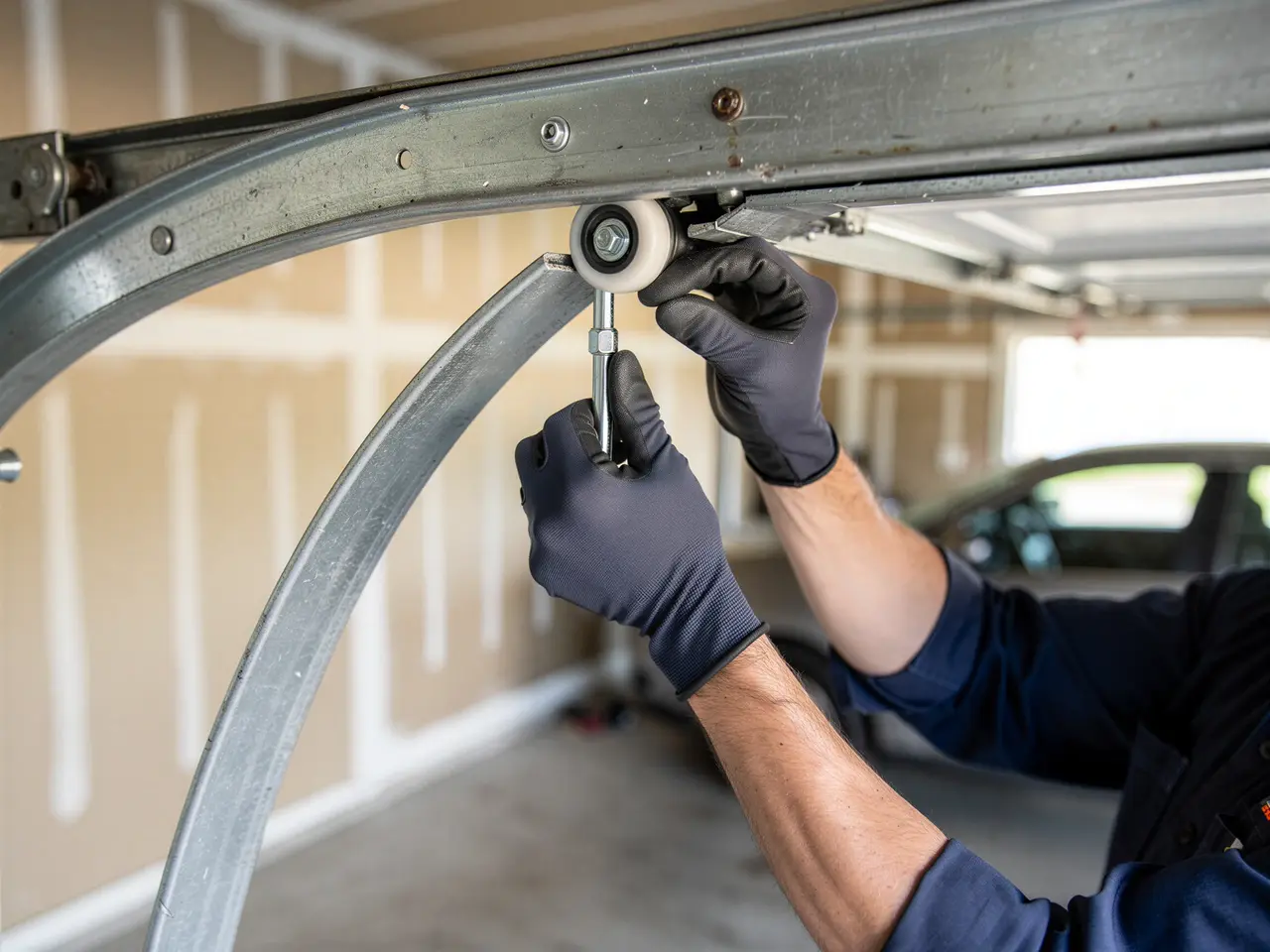
A roller job here is usually straightforward: pull the old roller, stem and all, out of the hinge bracket, swap in a new nylon or steel-ball unit, and check the track alignment while we're at it since worn rollers often chew up the track lip before anyone notices the noise. On a newer door like most of what's in Progress Village, we're rarely fighting rust-through or warped track from age - the structure's sound. It's the moving parts that have had their run.
Getting It Booked In
We work out of Riverview, about 6 miles from Progress Village, so there's no local branch or storefront here - just a truck that comes to you. Booking is the same as it would be for any job in this stretch of the service area: you describe what the door's doing (grinding, jumping the track, one side dragging), we figure out if it's rollers or something else tied to it, like a bent hinge, and we schedule the visit.
Because Progress Village is close in, travel time isn't the constraint - parts and scheduling are. If your rollers are original to a 2011-era door, it's a clean swap with common stock parts, not a specialty order, so there's nothing exotic slowing things down. Where it gets slower is if the roller failure has already damaged the track or bent a hinge bracket, which we won't know for certain until we're looking at the door in person. We'd rather tell you that upfront than promise a fifteen-minute fix and then need a second trip for a part.
What Is on the Truck
For roller work, the truck carries both nylon rollers and steel-ball rollers in the common stem lengths, since not every door uses the same length and we'd rather match what's already on your hinges than force a longer stem into a bracket it wasn't built for. We also carry replacement hinges and center brackets, because a worn roller often takes its hinge bracket down with it - the stem wallows out the hole over years of side-load, and putting a new roller into a worn bracket just buys you another service call in a year.
What we don't carry is every proprietary roller type from every door manufacturer. If your door came with a manufacturer-specific roller system - some higher-end builder packages used them - that can mean a short order delay rather than a same-visit swap. It's not common on the kind of mid-2000s-to-2011 construction typical of Progress Village, but it happens, and we'd rather flag it as a possibility than pretend every roller is interchangeable.
How It Shows Up
Roller failure announces itself before it strands you. The door starts making a rhythmic grinding or popping sound as it travels - one thump per roller per foot of track, easy to count if you stand and listen. On a 2011-built door, that's usually the first sign the original rollers have worn flat on one side or the bearing inside has given out. Left alone, it progresses: the door starts to jump or catch at the same spot in the track every time, then eventually a roller can pop clean out of the track, which can jam the door open or shut depending on where it happens.
The honest limitation here: once a roller comes out of the track entirely, you're not dealing with a simple swap anymore - there's a real chance the track's been bent in the process, and that's a different repair with different parts. We'll always check the track straightness as part of a roller call, because replacing a roller into a bent track just means it fails again in a few weeks. Catching the grinding noise early, before it jumps, is what keeps this a short job instead of a longer one.
What Causes It Around Here
Progress Village's mild temperate climate means we're not fighting the freeze-thaw cycling or heavy road-salt corrosion that chews up roller stems in colder parts of the country - that's not the failure mode here. What drives roller wear in this area is simpler: cycle count and the limits of the plastic that came standard on builder-grade doors around 2011. Nylon rollers are quieter and cheaper to install at construction time, but they have a shorter working life than steel-ball rollers, especially on a two-car door that gets opened and closed several times a day.
Given the median household income in this area sits well above the wider service area's $67,447 figure, we also see more owners upgrading from the original nylon rollers to sealed steel-ball units when they replace - not because the nylon ones are bad, but because steel-ball rollers quiet down and last longer under heavy daily use. Either way, the underlying cause is the same: doors from this build era are hitting the age where the factory rollers are done, regardless of which replacement the owner picks.
Frequently asked questions
Why are my rollers failing if the house is only from 2011?
Builder-grade doors typically ship with basic nylon rollers, and those have a shorter service life than steel-ball rollers - often 7 to 10 years of regular use. A 2011-built door is right in the window where those original rollers wear out, even though the door itself and the track are usually still in good shape.
Do you carry roller parts on the truck, or do you need to order them?
Common nylon and steel-ball rollers in standard stem lengths are stocked on the truck, along with hinges and brackets. A manufacturer-specific roller system can mean a short order delay, but that's uncommon on the kind of construction typical of Progress Village.
Is Progress Village covered by a local branch?
No - there's no branch or depot in Progress Village. The company works out of Riverview, about 6 miles away, and trucks travel to the job rather than operating from a storefront in town.
Can a bad roller damage my track?
Yes. Once a roller wears enough to jump out of the track, it can bend the track lip on the way out. That turns a simple roller swap into a roller-plus-track repair, which is why we check track alignment on every roller call rather than assuming it's untouched.
More garage door services in Progress Village
- Garage Door Cable Repair in Progress Village
- Garage Door Repair in Progress Village
- Garage Door Service in Progress Village
- New Garage Door Installation in Progress Village
- Off-Track Garage Door Repair in Progress Village
- Garage Door Opener Installation in Progress Village
- Garage Door Spring Repair in Progress Village
Book garage door service in Riverview
Call now or request a quote - tell us what the door is doing and where you are.