
Riverview, FL · Garage Door Service
What We Actually Check on a Riverview Service Call
A plain look at what a Riverview Garage Door Pros technician checks on a service call, tied to this area's housing stock and climate - no upsell, no guesswork.
- Repairs & new doors
- Springs & openers
- Serving 5 nearby communities
What to Check
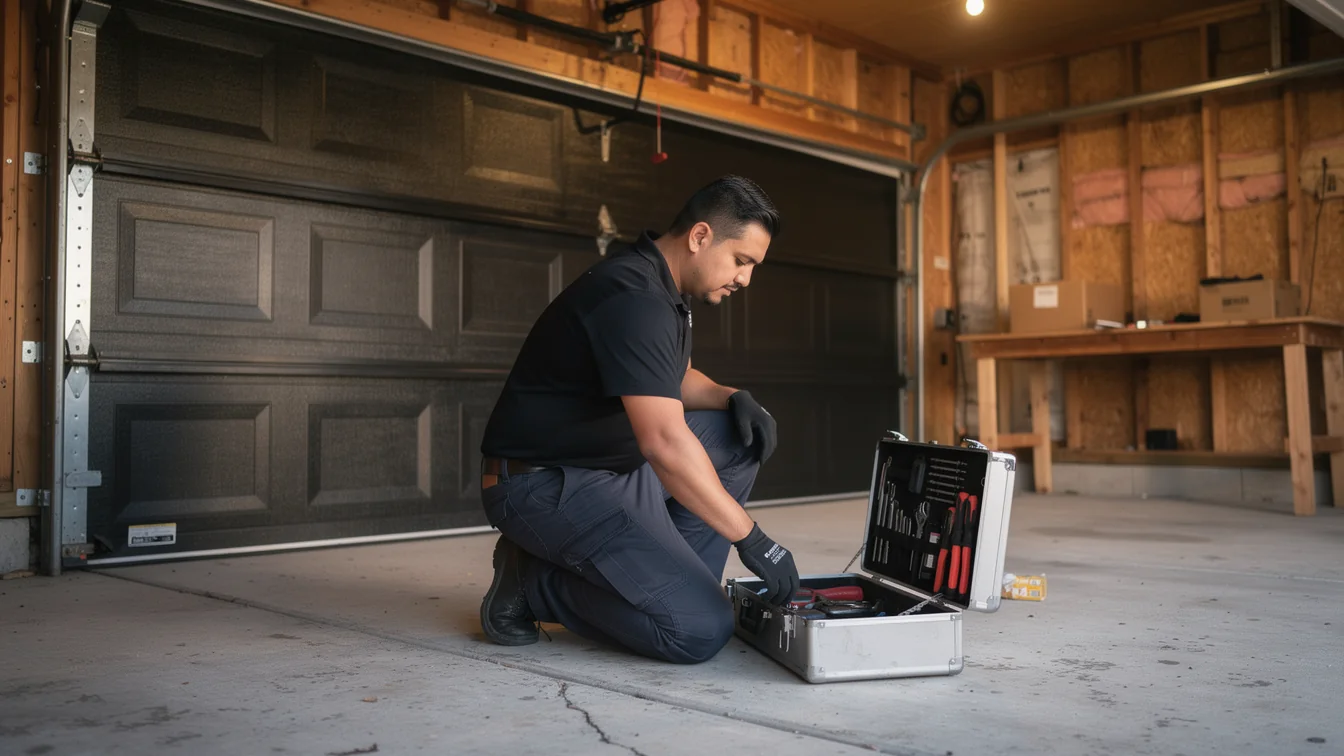
A service call here starts the same way every time: we open and close the door by hand before touching anything powered. Most houses in Riverview went up between 1979 and 2013, with the median build year sitting at 1991, so the hardware we find is rarely new-construction stuff. We check the springs first - torsion or extension, depending on the decade the house was framed - then the cables, the rollers, and the track alignment. On anything built in that 1980s-to-90s window, we also look hard at the bottom bracket and the end bearing plates, because that's where steel fatigue shows up first on doors this age. We test the opener's force settings and the auto-reverse safety, since a door that closes too hard on a toddler's bike is a liability whether the opener is five years old or twenty-five. Last, we check the wall button, the photo-eye sensors, and the weatherstrip at the bottom panel. None of this takes guessing - it's a fixed sequence, and we go through all of it even if you called about one specific noise, because a spring that's about to go rarely announces itself before it does.
What Local Conditions Do
Riverview sits in a mild temperate band, so we don't see the freeze-thaw cycle that cracks door bottoms and warps panels the way colder regions do. That's a real advantage - springs here don't see the same metal fatigue from repeated cold snaps. But mild doesn't mean dry. Humidity here still finds its way into un-insulated steel panels built before the 1990s, rusting out the bottom seal track from the inside even though the door looks fine from the driveway. On the 1980s and 90s stock that makes up a lot of this area's housing, that shows up as a bottom panel that's solid on the outside and flaking rust on the inside skin, usually around the weatherstrip channel. We also see corrosion on exposed hinges and roller stems faster than you'd expect for a place that never freezes, just from sustained moisture in the air. None of this is dramatic - no storm damage story, no single bad week that wrecks a door. It's slow, and it's why a door that looks untouched can still have a spring or hinge that's weaker than it should be.
Leaving It Alone
Not every call needs a repair. If the door is original to a house built in that 1979-to-2013 range and it's still running quiet, tracking straight, and closing with even pressure, we'll tell you that and leave. We're not going to recommend replacing an opener that's doing its job because it's old, and we're not going to swap a spring that still has life in it just because we're already there. With a median household income of $67,447 across the service area, most of the calls we get are from people weighing a repair against a bigger replacement, and the honest answer is often that the smaller fix is the right one. The one real limitation here: we don't carry every part for every decade of door on the truck. Some of the older 1980s hardware on original doors uses brackets and drums that aren't stocked anywhere local anymore, and if that's what's worn out, there's a lead time on the part before we can finish the job - we'll tell you that up front instead of padding the invoice with a workaround.
The Problem
The failure pattern we see most in this area traces straight back to the housing age. With 69,912 owner-occupied houses across the service area built mostly in that same 1980s-to-2013 window, a big share of doors are coming up on 20 to 40 years of cycles on the original spring and cable set - hardware that was never meant to last the life of the house. The second pattern is the humidity corrosion already mentioned: it eats hinges and bottom brackets quietly, so by the time a homeowner calls, the symptom is usually a loud bang or a door that won't budge, not a slow warning. The third is openers from that same construction era reaching the end of their gear life, which shows up as grinding, slow travel, or a motor that runs but doesn't move the door. None of these are mysteries once you know the age and the climate behind them - they're the two facts that explain almost every call we run in this part of the county.
Frequently asked questions
How old is a typical garage door in Riverview likely to be?
It depends on when the house was built, and most houses in this area went up between 1979 and 2013, with 1991 as the median year. If your house falls in the 1980s-to-90s range, the door and opener are often original, which puts a lot of the hardware we see at 25 to 40 years of use.
Does Riverview's climate cause different damage than colder states?
Yes, in a different way. The mild temperate climate here spares doors from freeze-thaw cracking, but sustained humidity corrodes un-insulated steel panels and exposed hinges from the inside, especially on doors built before the 1990s. It's slower and less obvious than cold-weather damage, but it adds up the same.
Will you tell me if a repair isn't worth doing?
Yes. If the cost of fixing an older door approaches what a new one runs, or if the part needed is on back order for an original 1980s-era bracket or drum, we say so on the spot rather than patching around it.
Related garage door services in Riverview
More garage door guides
Book garage door service in Riverview
Call now or request a quote - tell us what the door is doing and where you are.