
Riverview, FL · Garage Door Service
When a Spring Goes in Cold Weather Around Riverview
Riverview's mild climate hides a real risk: a rare cold night can snap a spring that's been aging quietly since your house was built. Here's what to check.
- Repairs & new doors
- Springs & openers
- Serving 5 nearby communities
What to Check
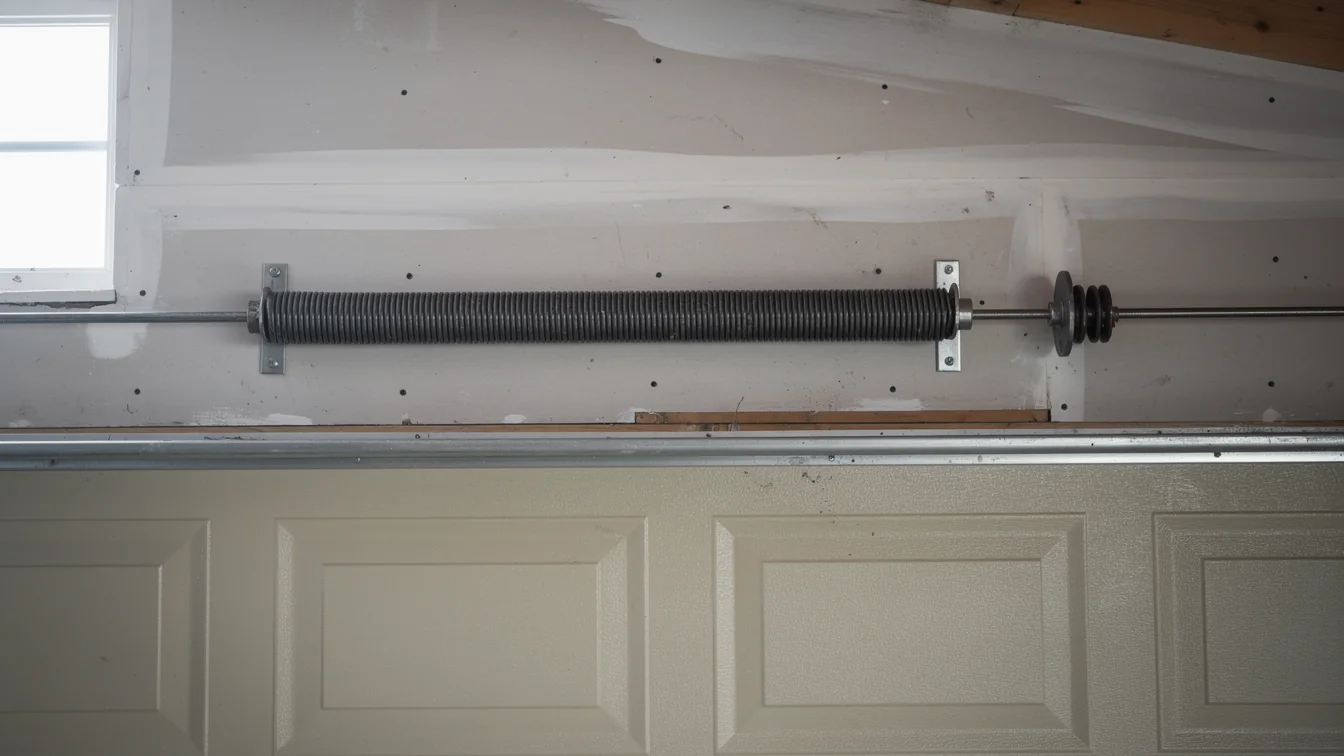
Most houses in this part of Riverview went up between 1979 and 2013, with the bulk of that stock dating to the 1980s and 90s. That matters because torsion springs have a working life measured in cycles, not years, but age still shows. If your house falls in that build window, look at the spring itself: rust along the coils, gaps where the coil has stretched unevenly, or a visible sag on one side of the shaft compared to the other.
Pull the door by hand with the opener disconnected. A door that feels heavy, drops fast, or won't hold halfway is telling you the spring has already lost tension, even if it hasn't snapped yet. Check the cable where it wraps the drum too - frayed strands near the bottom bracket usually show up before a spring actually breaks, and they're a cheaper fix if you catch them first.
We can't tell you the exact year your spring was last replaced without seeing the house, so if you don't have that record, treat any door over ten years old with original hardware as due for an inspection rather than waiting for it to fail on its own.
What Local Conditions Do
Riverview sits in a mild temperate band, which sounds like good news for a garage door and mostly is - no deep freeze, no months of salt or snow load on the track. But that steady mild pattern is exactly why a spring here is poorly conditioned for the rare sharp cold front that does roll through. A spring that flexes through small, consistent temperature swings all year holds up fine. One that's spent two decades in a narrow comfortable range, then gets hit with a sudden overnight drop, is more likely to snap right at that moment because the metal hasn't been exercised through real cold.
This is different from towns with harsh winters, where springs are rated and installed expecting the swing. Around here, the failure usually isn't gradual wear showing up in January - it's a spring that was already near the end of its life, sitting fine for months, that picks the one cold night to go. If you've noticed your door acting stiff only on cooler mornings, that's the mechanism, not a coincidence.
Leaving It Alone
A torsion spring under tension is not a part to leave hanging once it's showing signs of failure. If one side breaks and the other is still loaded, the door can drop unevenly or the shaft can spin hard enough to hurt someone standing nearby. We don't recommend homeowners replace torsion springs themselves - the winding bars and tension involved are not forgiving, and this is one job where the honest advice is to call rather than watch a video and try it.
Waiting also costs you more than risk. A door running on a half-failed spring puts extra strain on the opener, trying to lift weight the spring should be carrying. That can burn out a motor that was otherwise fine. For a household in this area, where median income runs around $67,447, replacing a motor on top of a spring is a worse bill than catching the spring early. If the door has started groaning or hesitating on cold mornings, that's the window to act, not after it locks up for good.
The Problem
Here's what actually happens: a torsion spring stores energy by twisting around a shaft above the door. Every open and close cycle uses a fraction of that spring's total life, and age plus a sudden drop in temperature can be enough to push a spring that's already near its limit past the point where the metal holds. It doesn't warn you first - the door simply won't lift, or lifts partway and stops, because the opener alone can't do what the spring used to help with.
For homes built in the 1979-2013 window that makes up most of Riverview's housing stock, this is less about a defect and more about timing. A spring installed when the house was built or first renovated has had decades of cycles by now. The cold night doesn't cause the failure so much as it's the moment the spring finally runs out of road. Knowing that is the difference between treating a stuck door as a mystery and recognizing it as a part that was simply due.
Frequently asked questions
Why would my garage door spring break on a cold night if Riverview doesn't get real winters?
Riverview's climate is mild and steady most of the year, so a spring here doesn't get regularly exercised through big temperature swings like it would in a colder region. When a rare cold front hits, a spring that's already aged and near the end of its cycle life is more likely to be the one that snaps, simply because the cold adds stress right at the point it was already weak.
How do I know if my spring is original to the house?
We can't tell you that without seeing the door in person - there's no record we have access to for a specific house. If your home was built in the common 1979-2013 range for this area and you don't know of a prior spring replacement, it's reasonable to assume it may be original and worth an inspection.
Can I replace a torsion spring myself to save money?
We don't recommend it. Torsion springs are under heavy tension and the winding bars used to set that tension aren't forgiving if something slips. It's one of the few garage door jobs where the risk of injury outweighs the savings of doing it yourself.
Is it the cold or the age that actually breaks the spring?
Usually both together. The age does the real damage over years of cycles; the cold snap is just the moment that pushes an already-weakened spring past its limit. A newer spring in the same cold night typically holds fine.
Related garage door services in Riverview
More garage door guides
Book garage door service in Riverview
Call now or request a quote - tell us what the door is doing and where you are.