
Riverview, FL · Garage Door Service
Is Your Older Riverview Garage Door Worth Fixing, or Done
Riverview homes mostly date 1979-2013, median 1991, and sit in a mild climate band. Here's what that means for deciding if your old garage door is worth fixing.
- Repairs & new doors
- Springs & openers
- Serving 5 nearby communities
What to Check
Start with the springs, not the opener. Most houses in Riverview and the surrounding areas were built between 1979 and 2013, with a median year right around 1991, which puts a lot of doors here at thirty-plus years on original or first-replacement hardware. Pull the release and lift the door by hand. If it's heavy and drops fast, a torsion or extension spring has lost tension - common, fixable, and usually the cheapest repair on the list.
Next check the track and rollers. On the steel panel doors typical of that 1980s-90s build era, nylon rollers wear out long before the panels do, and a bent track from one hard knock doesn't mean the door is junk. Look at the bottom bracket and hinges for rust streaking - that's corrosion from humidity, not structural failure. Last, check the opener's motor gear and the logic board date if it's visible. An opener from that same build era is often the actual weak link, not the door itself. Separating a door problem from an opener problem is the difference between a $150 repair and a full swap you didn't need.
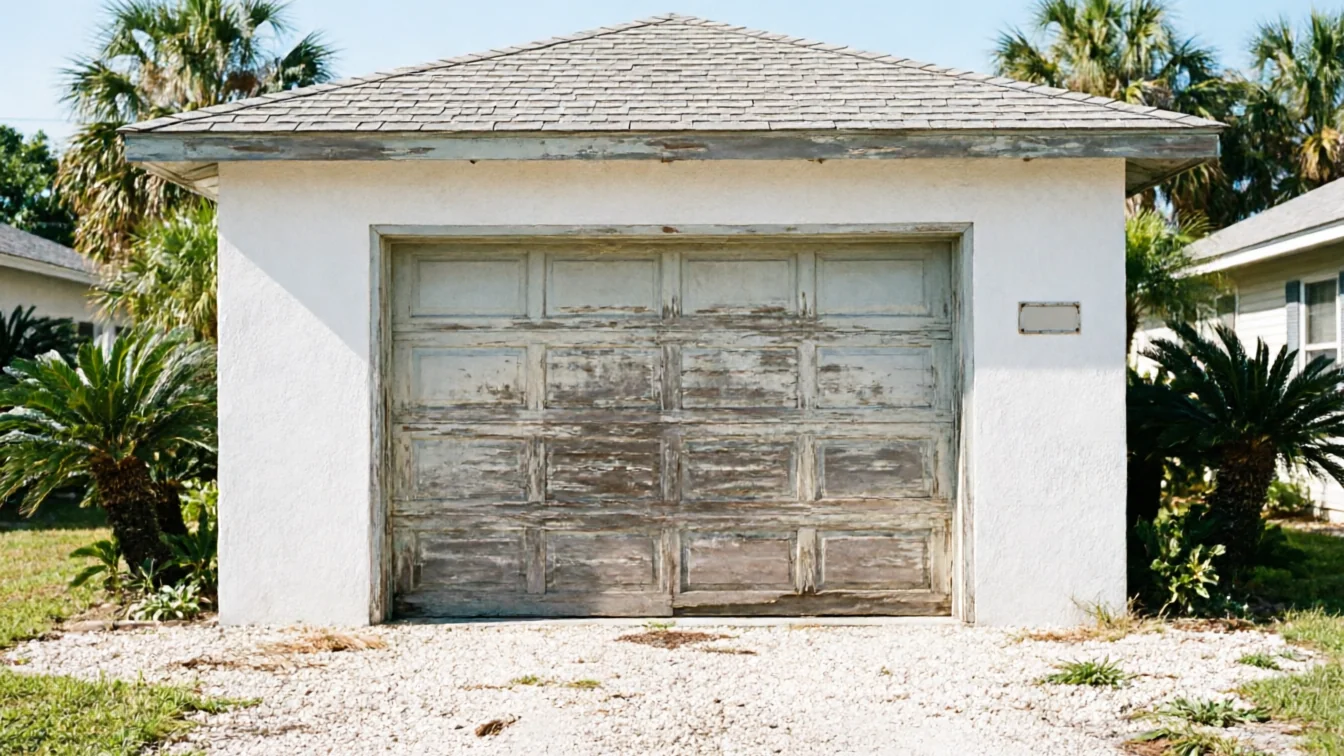
We don't repair doors with cracked or delaminated wood panels past a certain point - at that stage the panel itself is failing, not just the hardware.
What Local Conditions Do
Riverview sits in a mild temperate band, and that matters more than owners think. In places with hard freeze-thaw cycles, steel contracts and expands enough to crack weatherstripping and warp track alignment every winter. That's not what's wearing out doors here. What you get instead is humidity and rain exposure working slowly on exposed metal - bottom brackets, hinge pins, cable ends, and the spring coils themselves if they're not galvanized.
That's actually good news for an older door. A spring or torsion bar that's lasted twenty-plus years in this climate hasn't been fighting the same freeze stress a door in a colder state would have. If the coils are clean and not pitted, there's often real life left in them. The rust you want to worry about is localized - a bracket bolted directly where rain runs off the roofline, or a track mounted low near a slab that holds moisture. Spot rust on a bracket is a bracket replacement, not a door replacement. Widespread pitting through the metal, where you can see daylight through a hinge plate, is a different conversation, and at that point we're talking hardware swap at minimum.
Leaving It Alone
Not every noise or stiff spot means the door needs work today. A door that opens a little slower in high humidity, or that needs a shot of lubricant on the rollers twice a year, is behaving normally for this area - that's maintenance, not decline.
With a median household income of $67,447 across the service area and roughly 69,912 owner-occupied houses in the broader Riverview area, most owners we talk to are weighing a repair bill against a full replacement that runs several times higher. For a door that's structurally sound - straight panels, tracks that aren't bent, an opener that still has working safety sensors - fixing the specific broken part almost always makes more financial sense than swapping the whole unit.
Where that math flips is when you're stacking repairs: a new opener motor, then new rollers, then a new spring, all within a year or two. At that point you're paying repair prices for something that adds up to a replacement anyway, just spread out and without the warranty a new door would carry.
The Problem
The failure mode that actually matters is a cable or spring that goes without warning. On the steel panel doors common across the 1980s and 90s stock here, a worn cable under full spring tension doesn't fray gradually and give you notice - it snaps, and a heavy door section can drop fast on whatever's underneath it, including a hand or a foot. That's the real argument for checking an older door now rather than waiting for it to announce itself.
The second problem is quieter: an opener's safety reversal sensors drifting out of alignment over years of minor bumps and settling. A door that doesn't reverse when something's in its path is a liability sitting in the garage, and it's common enough on openers that have been running since the original build era of these houses. Both of these are the kind of thing worth a look before they become the kind of thing worth an emergency call. Neither one means the door is done - they mean it's due.
Frequently asked questions
How do I know if my garage door spring is actually worn out or just needs adjusting?
Disconnect the opener and lift the door by hand at the midpoint. A healthy spring holds the door roughly level and lets it stay put a few feet up. If it drops on its own or feels dramatically heavier than it should, the spring has lost tension and needs replacing, not adjusting - torsion springs aren't a DIY adjustment job given the tension involved.
Is it worth fixing a door that's original to a 1980s or 90s Riverview house?
Usually yes, if the panels and track are straight. Steel doors from that build era hold up well in this mild climate, and parts for common torsion and extension setups from that period are still available. The repair usually costs a fraction of replacement unless you're also dealing with panel damage or persistent rust through the metal.
Why does my garage door rust here if it doesn't freeze in Riverview?
Humidity and rain exposure corrode exposed steel hardware over time even without freeze-thaw cycles. Bottom brackets, hinge pins, and cable ends near roof runoff or low slab areas are the usual spots. It's slower than freeze damage but steady, so it's worth checking those specific points on an older door.
Related garage door services in Riverview
More garage door guides
Book garage door service in Riverview
Call now or request a quote - tell us what the door is doing and where you are.